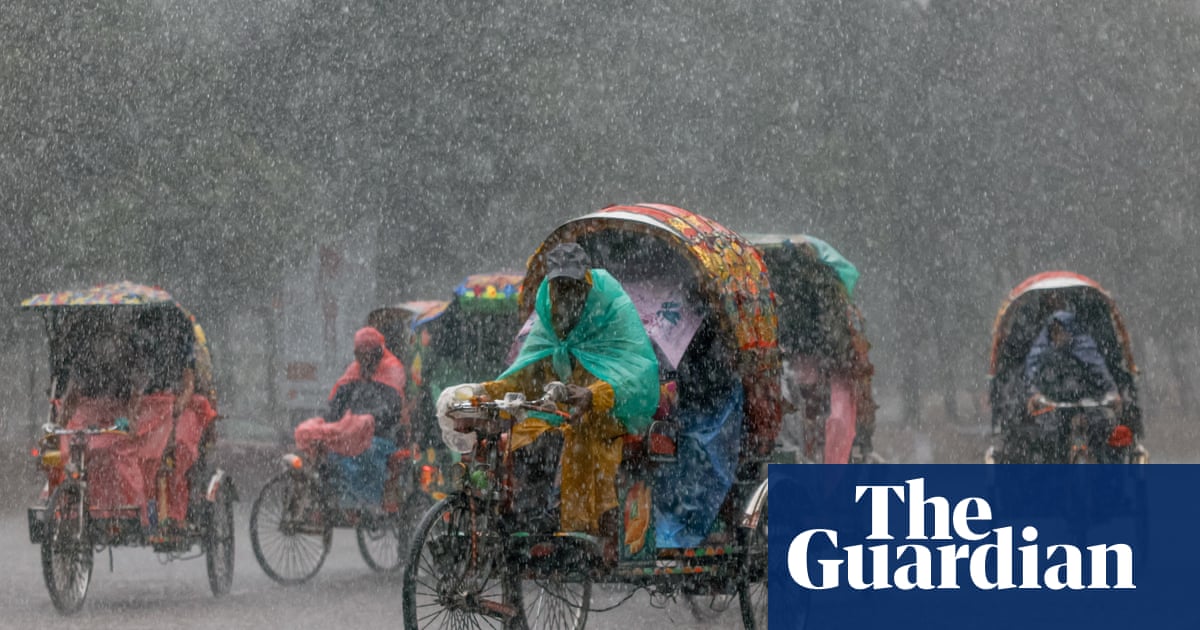
World’s wettest rainstorms are getting wetter, affecting flood and drought risk
A new body of climate research indicates that the world’s most intense rainstorms, the events responsible for delivering roughly half of the planet’s total rainfall, are becoming shorter in duration but significantly more intense, a shift with profound consequences for both flood and drought risk across the globe. Scientists analysing decades of precipitation records have found that these high-volume downpours are compressing into narrower windows of time, meaning a location may receive the same amount of rain it once expected over a longer period in a far shorter, more violent burst. The finding carries particular weight for heavily populated regions already grappling with erratic monsoons, aging drainage infrastructure, and growing water insecurity. Because these extreme events account for such a large share of global precipitation, even modest changes in their behaviour can cascade through agriculture, water supply, and disaster preparedness systems. Researchers caution that the trend is not uniform everywhere, but the overall direction is clear enough to demand attention from governments and planners.
The scientific understanding of how rainfall is distributed has advanced considerably over the past two decades, aided by satellite observations, ground-based gauge networks, and increasingly sophisticated climate models. Earlier work established that a warming atmosphere can hold more moisture, a physical relationship that primes the climate system for heavier precipitation when conditions favour storm formation. What the newer research adds is a sharper picture of how that moisture is delivered, not merely how much falls over a season but how it is packaged into individual events. This distinction matters enormously, because a steady week of moderate rain and a single day of torrential downpour can produce similar totals while causing completely different outcomes on the ground. The emerging evidence suggests that the latter pattern is becoming more common, even as some regions experience longer dry spells between storms.
Analyses of precipitation data across multiple continents point to a consistent pattern in which the most productive storm systems, those that generate the bulk of annual rainfall, are intensifying at rates that outpace changes in average conditions. This means that extreme rainfall is not simply rising in lockstep with total precipitation but is amplifying disproportionately, a signal that researchers associate with thermodynamic changes in the atmosphere. The compression of rainfall into shorter bursts has been documented in settings ranging from tropical monsoon belts to temperate mid-latitude zones, though the magnitude of the shift varies by region and by the quality of local observational records. Scientists emphasise that detection is complicated by the uneven global distribution of rain gauges and by the challenges of maintaining consistent satellite calibration over long periods. Even so, the convergence of evidence from independent datasets has strengthened confidence in the broad finding.
The implications for water management are substantial and cut in two directions simultaneously. More intense bursts raise the risk of flash flooding, particularly in cities where paved surfaces and constrained drainage channels cannot absorb sudden deluges, and in mountainous areas vulnerable to landslides and debris flows. At the same time, shorter and more violent storms may allow less water to infiltrate into soils and aquifers, with much of it running off rapidly toward rivers and eventually the sea. That dynamic can worsen drought conditions in regions that depend on groundwater recharge and on the slow accumulation of soil moisture during gentler rains. Agricultural planners, dam operators, and municipal water authorities are therefore confronting a dual challenge: protecting communities from sudden inundation while also safeguarding the reserves needed to survive increasingly prolonged dry periods.
This research arrives amid a broader reorientation of climate science toward the study of extremes rather than averages, reflecting a recognition that societies are often most vulnerable to the tails of the distribution rather than its middle. International climate assessments have increasingly highlighted precipitation extremes as a high-confidence consequence of global warming, and disaster loss databases show that flood-related damages have mounted in many parts of the world. The findings also intersect with debates over adaptation finance, as developing nations argue that they bear the brunt of increasingly erratic rainfall despite contributing least to historical emissions. Urban planners in rapidly growing cities across Asia and Africa face particular pressure, since infrastructure designed according to last century’s rainfall assumptions may prove inadequate for the coming decades. Insurance markets, too, are reassessing exposure as the actuarial assumptions underpinning flood coverage are tested by changing storm behaviour.
Historical records offer instructive parallels, though none that fully capture the current trajectory. Paleoclimate evidence and instrumental archives show that past shifts in precipitation regimes, whether driven by volcanic eruptions, ocean circulation changes, or long-term natural cycles, have repeatedly stress-tested civilisations dependent on predictable rainfall. The Dust Bowl of the 1930s in North America and the Sahel droughts of the late twentieth century demonstrated how sustained changes in rainfall patterns can reshape economies and drive migration. What distinguishes the present situation is the pace of change and the scale of the exposed population, with billions of people now living in regions where rainfall variability carries direct consequences for food and water security. Researchers note that natural variability has always produced extreme events, but the systematic intensification of the wettest storms appears to be superimposed on that background noise.
Looking ahead, scientists expect the observed trends to continue and likely strengthen as long as atmospheric greenhouse gas concentrations keep rising, with the most robust projections indicating further intensification of extreme precipitation across most land regions. Improved observational networks and higher-resolution climate models are expected to sharpen estimates of regional risk, giving planners better tools to design resilient infrastructure, revise flood-zone maps, and rethink reservoir operations. Upcoming international climate negotiations and national adaptation planning processes are likely to focus greater attention on how societies can prepare for rainfall that arrives in more concentrated and less predictable bursts. Experts argue that a dual strategy is needed, combining investments in drainage, early warning systems, and flood defences with measures that capture and store water during intense events for use during dry spells. The challenge, they say, is not merely to brace for wetter storms but to redesign how the world manages water in an era when both too much and too little are becoming more common.