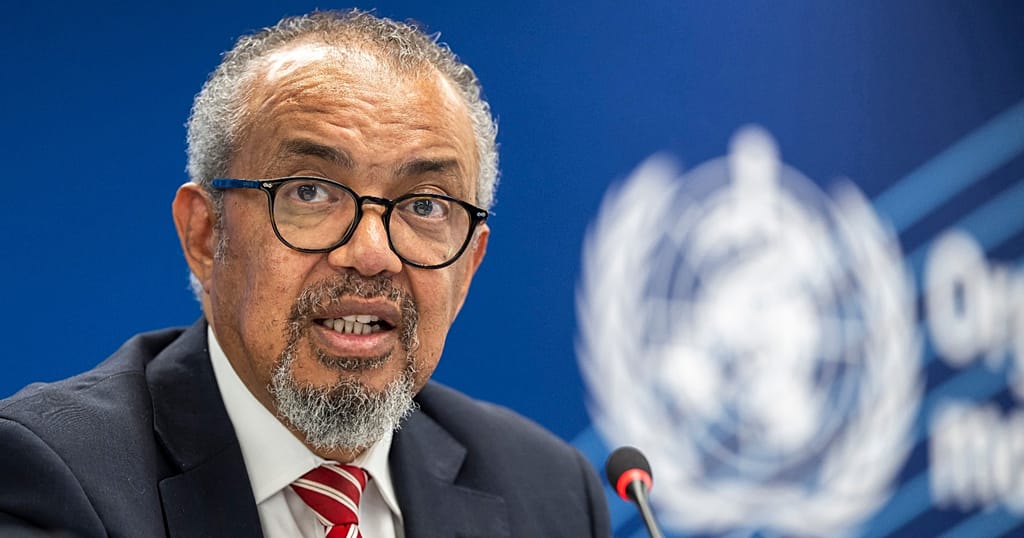
WHO approves clinical trials on two new Ebola vaccines
The World Health Organization has approved clinical trials for two new Ebola vaccines, a move aimed at accelerating the fight against an outbreak in Africa that has already claimed more than 5,300 lives. The approval, announced on Wednesday, clears the way for researchers to test the candidate vaccines in human volunteers under controlled conditions. Health officials are hopeful that the trials will yield additional tools to contain a virus that has overwhelmed weak health systems in affected countries. The decision reflects growing urgency among global health authorities as the death toll continues to climb despite intensive containment efforts. The WHO's backing is expected to speed up the regulatory and ethical review process that normally precedes large-scale human testing.
The outbreak has exposed the limitations of existing response mechanisms, with health workers struggling to trace contacts, isolate patients and provide care in areas with fragile infrastructure. Communities in affected regions have shown resistance to some containment measures, complicating efforts to break transmission chains. International agencies have deployed teams and supplies, but the scale of the crisis has outpaced the response capacity on the ground. The approval of new vaccine trials is seen as part of a broader strategy that combines treatment, prevention, community engagement and surveillance. Without a licensed vaccine or proven cure, authorities have relied heavily on supportive care and strict infection-control practices to limit the spread of the disease.
The two candidate vaccines will be evaluated for safety and their ability to provoke an immune response in volunteers. Researchers will follow standard trial protocols, beginning with small groups and gradually expanding if early results are encouraging. The WHO's endorsement does not guarantee that the vaccines will ultimately prove effective, but it allows scientists to gather critical data faster than would otherwise be possible. Health authorities have stressed that the trials will be conducted under strict ethical oversight, with informed consent from participants and independent monitoring of outcomes. The findings will be shared with regulatory bodies, which will then determine whether the vaccines can be deployed more widely.
The announcement has been cautiously welcomed by public health experts, who caution that trials are a long and uncertain process and should not be seen as an immediate solution to the outbreak. Some specialists have emphasized the importance of maintaining focus on proven measures such as isolation, contact tracing and safe burials while vaccine research proceeds. Others have pointed to the need for equitable access, so that any successful vaccine reaches the communities most at risk rather than being hoarded by wealthier nations. Governments in the affected region have expressed willingness to collaborate with international partners on the trials. The WHO has also called for sustained funding and political commitment to ensure that research efforts are not hampered by resource shortages.
The Ebola outbreak fits into a wider pattern of emerging infectious diseases that repeatedly test global preparedness. Recent decades have seen outbreaks of Ebola, Zika, SARS and other pathogens that spread rapidly across borders and stretch health systems beyond capacity. The international community has repeatedly pledged to strengthen early-warning systems, research capacity and stockpiles of medical supplies, though progress has often been uneven. The current crisis has renewed debate about how quickly experimental treatments and vaccines can be moved from the laboratory to the field during emergencies. It has also highlighted the persistent gap between the countries that host outbreaks and the global institutions that set research priorities.
Historically, Ebola outbreaks have been tackled largely through traditional public health measures, with vaccine development lagging for years because the disease was seen as rare and confined to remote areas. That changed after the devastating West African outbreak that began in 2014, which prompted accelerated research and the eventual development of vaccines that have since been used in later outbreaks. The current trials build on that legacy, but researchers face familiar challenges: conducting rigorous science under difficult conditions, in communities that may be wary of outside intervention, while racing against a disease that kills quickly. Lessons from past outbreaks have taught health officials that community trust and transparent communication are as crucial as scientific innovation.
In the coming months, the trial results will be closely watched by governments, regulators and international health agencies. If early data suggest the vaccines are safe and immunogenic, larger trials could follow, potentially leading to emergency-use authorization in affected countries. The WHO has indicated that it will continue to coordinate with partners on research priorities and on plans for eventual deployment. However, officials caution that the outbreak response cannot wait for a vaccine, and that current measures must be strengthened even as research moves forward. The outcome will depend on sustained funding, cooperation among affected countries and the willingness of communities to participate in both trials and containment efforts. For now, the approval of trials marks a hopeful step in a crisis that has already exacted a heavy human toll.