US markets raise toast to dems' victory, key indices rise over 2%; gold soars too
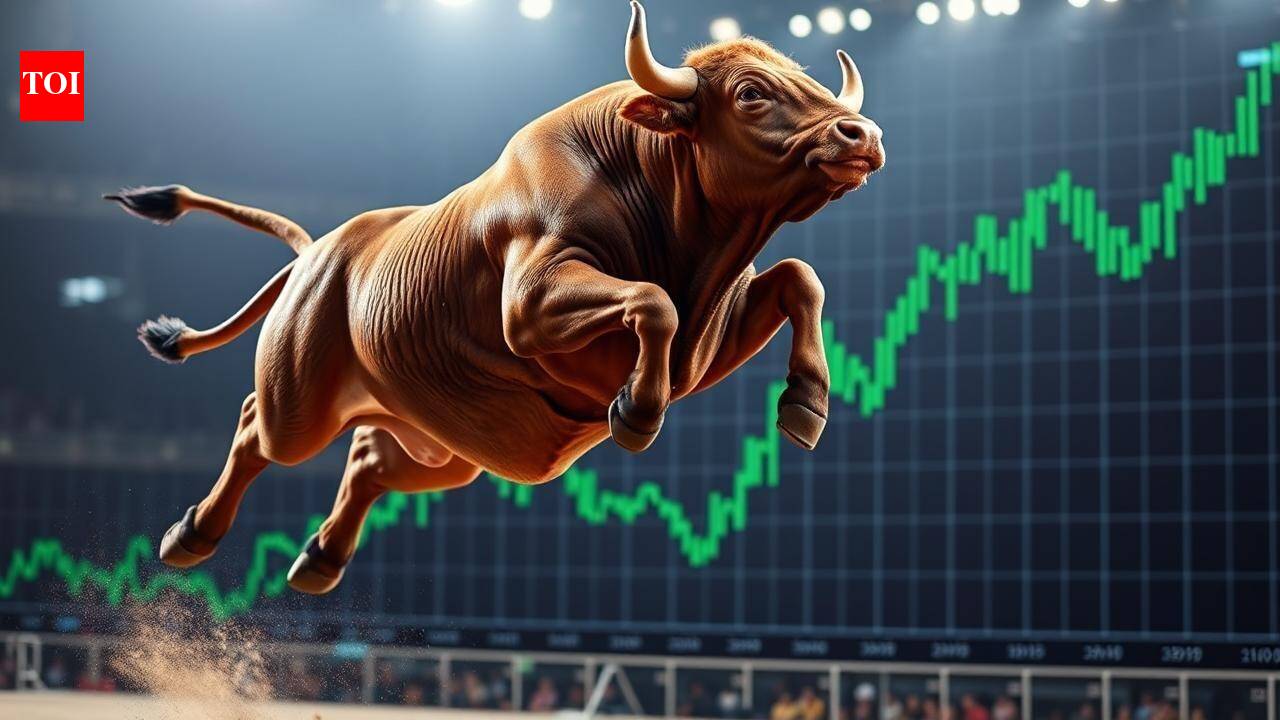
Wall Street rallied sharply on Wednesday, with the major US stock indices climbing more than 2% as investors welcomed the outcome of the US presidential election, while gold prices soared in tandem as markets positioned for fresh fiscal stimulus and sustained easy monetary policy. The benchmark S&P 500, the tech-heavy Nasdaq and the blue-chip Dow Jones Industrial Average all posted robust gains, reflecting a broad-based surge in risk appetite across sectors. The rally came as vote counting pointed to a decisive result, removing a key element of uncertainty that had weighed on global markets in the run-up to the election. Asian markets, including India's Sensex, which rose for the fifth consecutive session and gained 4,055 points or 5.5% over the stretch, took their cue from the strong overnight handover from the US, underscoring the interconnectedness of global equity markets in the current environment. The simultaneous strength in both equities and gold underlined the unusual nature of the moment, where investors were celebrating political clarity while also hedging against inflation and prolonged monetary accommodation.
The build-up to the US election had seen markets worldwide adopt a cautious stance, with volatility gauges elevated and investors reluctant to commit fresh capital until the direction of American policy became clearer. Global equities had traded in a tight range for weeks as polls suggested a closely contested race and the possibility of a prolonged dispute over the results loomed large. The Sensex's five-session winning streak, which began before the US verdict was known, suggested that domestic factors such as encouraging corporate earnings and sustained foreign fund inflows were already supporting Indian equities independently of the American political cycle. The clarity emerging from the US ballot count therefore acted as an additional catalyst rather than the sole driver of the rally, reinforcing an upward momentum that had been building on Dalal Street for some time.
Market participants attributed the US surge to the prospect of a divided government in Washington, which historically has been viewed favourably by investors because it reduces the likelihood of sharp tax increases or disruptive regulatory changes. A split between the executive and legislative branches is widely seen as conducive to gridlock, which markets often prefer to sweeping policy shifts in either direction. At the same time, the expectation of continued fiscal support for the pandemic-hit American economy, regardless of which party controls which chamber, kept the liquidity-driven optimism intact. Gold's parallel ascent was read as a signal that investors expect central banks to maintain accommodative stances for an extended period, keeping real interest rates low and enhancing the appeal of the yellow metal as a store of value.
The rally in the US had immediate reverberations across global markets, with equities in Europe and Asia following Wall Street higher and emerging market currencies firming against the dollar. Foreign institutional investors, whose flows are a critical driver of Indian equities, were seen returning to risk assets, and sectors such as information technology and pharmaceuticals, which derive substantial revenue from the US, drew particular interest. Analysts cautioned, however, that the market's enthusiasm could be tested if the political transition in Washington proves turbulent or if policy priorities shift in ways that hurt global trade. The strength in gold also reflected lingering concerns that massive stimulus measures on both sides of the Atlantic could eventually stoke inflation, a theme that has been gaining traction among investors in recent months.
The twin rally in stocks and gold fits into a broader narrative that has defined global markets through the pandemic era, in which unprecedented central bank liquidity has lifted virtually all asset classes simultaneously. The US Federal Reserve's ultra-loose monetary policy, combined with fiscal packages worth trillions of dollars, has created an environment where both growth-oriented equities and defensive haven assets can appreciate at the same time. For India, the Sensex's 5.5% gain over five sessions highlighted the resilience of domestic equities amid a still-uncertain global backdrop, though the rally has also raised questions about valuations. Market observers have noted that the Indian benchmark has recovered strongly from its pandemic-era lows, supported by a gradual reopening of the economy and better-than-expected corporate results in several sectors.
History offers a useful lens for interpreting the current optimism, as US markets have often rallied in the aftermath of presidential elections once the uncertainty of the campaign is removed. Past cycles have shown that equities tend to advance in the months following a clear verdict, regardless of the party that wins, because investors prefer predictability over ambiguity. The post-election period in previous cycles has also been marked by sector rotation, as investors reposition their portfolios to reflect the incoming administration's likely policy priorities. Gold, meanwhile, has historically performed well during periods of expansive fiscal policy and low real rates, a pattern that appears to be repeating in the present cycle.
Looking ahead, markets will focus on the mechanics of the US transition, the shape of any new stimulus package, and the trajectory of the pandemic, which remains the single biggest variable for global growth. In India, investors will watch for the sustainability of foreign fund inflows and the third-quarter earnings season for cues on corporate health. The Reserve Bank of India's policy stance and the government's fiscal measures will also be critical in determining whether the Sensex can extend its winning streak. While the immediate mood is celebratory, market participants are likely to remain sensitive to any signs of political discord in Washington or a resurgence of virus-related restrictions that could derail the fragile global recovery.