Famed drummer Clem Cattini passes away at 89 after MAJOR fall at his residence:‘A true powerhouse of percussion’
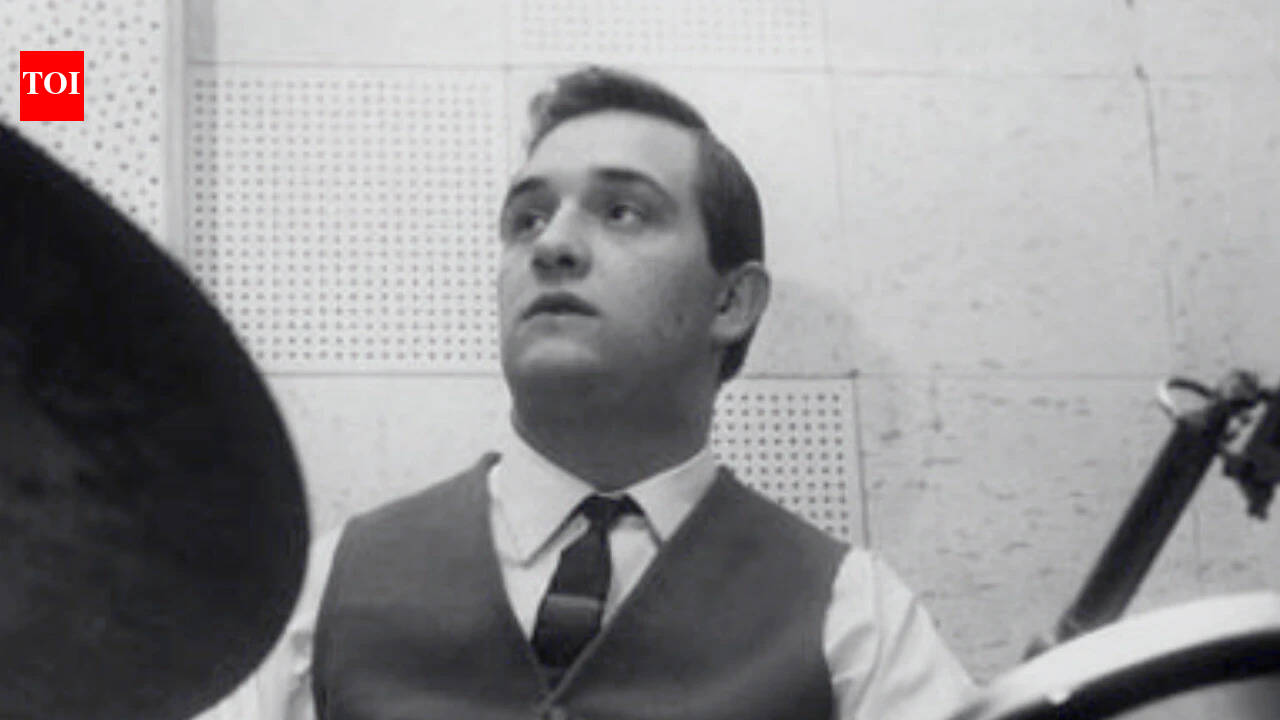
Veteran British session drummer Clem Cattini, one of the most recorded musicians in the history of British popular music, has died at the age of 89 following a serious fall at his home. According to reports emerging from the United Kingdom, Cattini sustained injuries in the accident at his residence and did not recover. His passing was confirmed by family and friends, with tributes describing him as "a true powerhouse of percussion." Cattini was best known to the wider public as the drummer for the Tornados, the instrumental group whose 1962 single Telstar became the first record by a British band to top the American Billboard chart, but his influence extended far beyond that one landmark hit.
Born in London in 1937, Cattini came up through the flourishing skiffle and early rock and roll scene of the late 1950s, honing his craft in the dance halls and studios of the capital. He joined the Tornados at the height of the beat boom and played on Telstar, a futuristic Joe Meek production that captured the space-age optimism of the era and sold millions of copies worldwide. Even after the Tornados disbanded, Cattini remained in constant demand as a session musician, becoming one of the small circle of drummers who powered an extraordinary share of British pop recordings during the 1960s and 1970s. His reputation rested on impeccable timekeeping, versatility across genres, and a calm professionalism that made him a favourite of producers.
As a session player, Cattini's credits read like a history of British music, spanning pop, rock, and easy listening. He is widely associated with recordings for Tom Jones and Engelbert Humperdinck, and he worked with a vast roster of artists and producers across several decades. He was also part of the group of musicians who backed many of the era's biggest names, and his work is said to have featured on an enormous number of hit records, though the exact tally has long been debated among music historians. Beyond his studio output, he remained a respected figure among fellow drummers, admired for the sheer volume of records on which his playing can be heard. His death removes another link to the golden age of British session musicianship.
Tributes have begun pouring in from across the music industry, with fellow musicians, producers, and fans recalling Cattini's contributions to countless recordings. Former collaborators and contemporaries have described him as a foundational figure whose playing shaped the sound of an era, and social media has filled with reminiscences from listeners discovering just how many familiar records he played on. The Tornados' legacy, and Cattini's role within it, has been highlighted in many of the remembrances. Details of funeral arrangements and any memorial plans were not immediately confirmed, and his family has asked for privacy while they mourn.
Cattini's death comes at a moment when the generation of musicians who defined the 1960s is steadily diminishing, prompting renewed reflection on the often anonymous session players who built the sound of the era. Session drummers of his calibre were the backbone of the British recording industry at its commercial peak, yet most remained far less famous than the stars they backed. In recent years, documentaries, books, and archival projects have sought to correct that imbalance by highlighting the contributions of these unsung musicians. Cattini's passing is likely to accelerate that reckoning, as fans and historians revisit the catalogue of records on which he played. His career stands as a reminder that behind many of the biggest hits of the twentieth century stood a small, elite group of studio professionals.
Cattini's story mirrors that of other celebrated session musicians whose names were rarely on the record sleeve. In Britain, players such as the members of the legendary studio collectives of the 1960s became quietly indispensable to producers, appearing on hundreds of recordings across genres, much as the celebrated session bands of American studios did for Motown and other labels. The Tornados themselves occupy a singular place in British pop history, with Telstar standing as an early milestone of British chart success in the United States. Comparisons will inevitably be drawn to the recent passings of other veterans of that scene, each loss marking the fading of a firsthand connection to the birth of modern pop music. Cattini's durability, spanning decades of changing tastes, set him apart even among that elite company.
In the coming days, further tributes are expected from artists, institutions, and fans, and it is likely that radio programmes and music publications will revisit Cattini's most celebrated recordings, particularly Telstar, as listeners reassess his legacy. Reissues, archival features, and retrospective playlists spotlighting his session work may follow, giving audiences a chance to appreciate the breadth of his contribution. For the music industry, his death is a moment to consider how session musicians are remembered and credited in an age of streaming, when liner notes have largely vanished and individual contributions are often obscured. Above all, Cattini will be remembered as a drummer whose steady beat underpinned some of the most enduring records of the twentieth century, a legacy that will continue to be heard whenever those songs are played.