US to ban Canadian motorcycle, dairy, alcohol imports as trade war sizzles
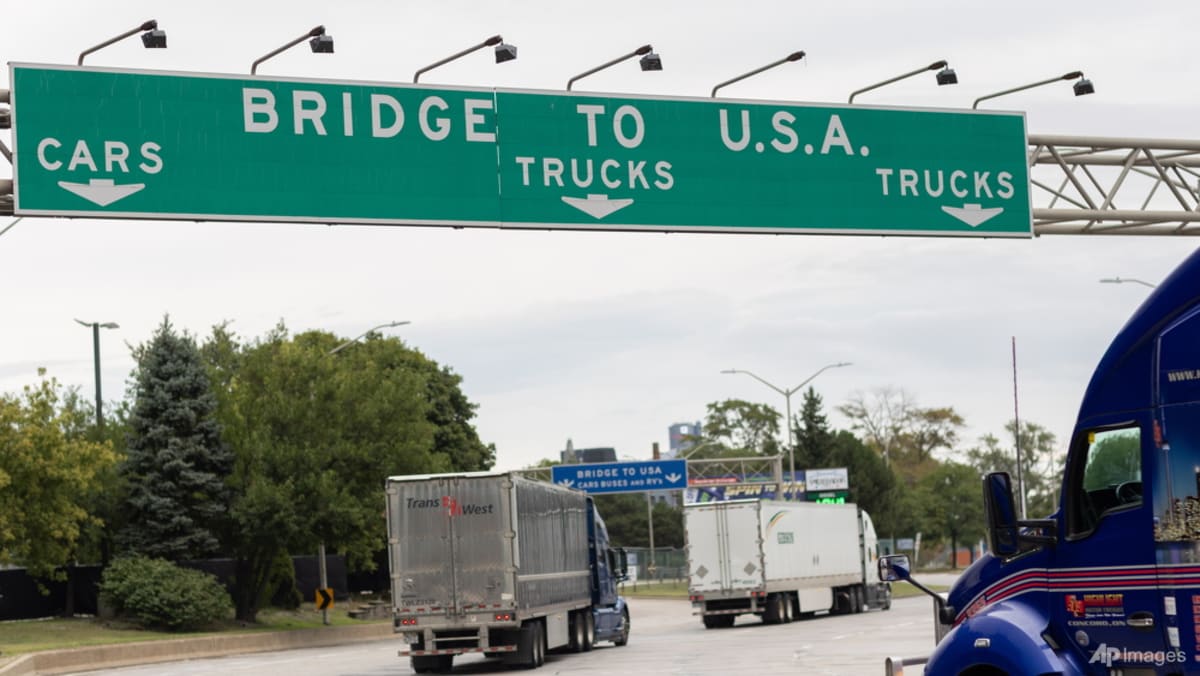
Transport trucks cross the Ambassador Bridge into the United States of America in Windsor, Ontario, Canada, on Aug 22, 2026. (Photo: Dax Melmer/The Canadian Press via AP)
WASHINGTON: The United States banned a broad swath of Canadian alcoholic beverages, motorcycles and dairy products from import on Tuesday (Sep 8), sharply escalating an already acrimonious trade spat.
The import bans, which go into effect on Sep 29 and were published on the White House's website, came after Canada's own retaliatory tariffs on US goods took effect after midnight on Tuesday (Sep 8).
Those Canadian levies themselves followed 50 per cent tariffs that the United States imposed on some US$20 billion of Canadian goods last month, after several rounds of negotiations collapsed.
The breakdown has widened a rift between the longtime allies, who have blamed each other for the failed talks, and spurred Canadian Prime Minister Mark Carney to urge a further shift away from Canada's biggest trading partner.
CNA Games Guess Word Crack the word, one row at a time Buzzword Create words using the given letters Mini Sudoku Tiny puzzle, mighty brain teaser Mini Crossword Small grid, big challenge Word Search Spot as many words as you can Show More Show Less "We have everything we need to pivot and prosper," Carney said on Tuesday in a video posted on YouTube after the tariffs came into effect.
"That pivot will come at a cost. There's always a cost to action. But it doesn't come close to the cost of standing still," he said.
The US bans appeared to cover most alcohol products, including beer and various types of wine, whisky, bourbon, rum, vodka, vermouth, tequila, mezcal, and brandy.
The dairy ban covers whey protein, invert molasses, cane molasses and non, alcoholic beer, per notices on the White House's website.
In addition to the import bans, various cheese products were added to a list of products subject to a 50 per cent tariff, but not banned outright. Some paper, aluminium, wood, furniture, lighting and other products were also added to the list.
A US official said President Donald Trump's pre, existing threat to increase tariffs on Canadian autos from 25 per cent to 50 per cent on Jan 1 remained in effect.
The official added that US Trade Representative Jamieson Greer had spoken with Dominic LeBlanc, Canada's minister responsible for bilateral US trade, over the past couple of days, and the pair were expected to speak again in the coming days to see if there was an alternative path for the two countries.
Ottawa's retaliatory measures, which in turn provoked Washington's move on Tuesday night, were designed to put economic and political pressure on Washington, Canadian government officials said.
Those counter, tariffs cover some US$20 billion of US goods, with duties ranging from 15 per cent to 50 per cent across products from steel and furniture to clothing and electronics, and are expected to hit sectors in some competitive states such as Michigan and Ohio, ahead of US midterm elections in November.
Gabriel Brunet, spokesperson for LeBlanc, said: "Canadian and American officials have maintained ongoing discussions on a range of issues, although formal trade negotiations are not taking place at this stage."
While the new tariffs affect a small amount of exports compared with total trade between the US and Canada, some analysts worry the standoff could destabilise the US, Mexico, Canada Agreement, the free, trade pact that succeeded NAFTA. Together they have underpinned commerce across North America for decades.
"What we are worried about is an escalatory spiral," said Michael Harvey, executive director of the Canadian Agri, Food Trade Alliance and a member of Carney's advisory committee on bilateral US economic relations.
"But at the same time, we totally understand that the prime minister needs to find areas of leverage."
Trump has been lobbing various attacks at Canada on Truth Social in recent days.
On Monday, he said Canadian private jet maker Bombardier would no longer be allowed to sell its planes in the United States unless it started manufacturing in the country.