
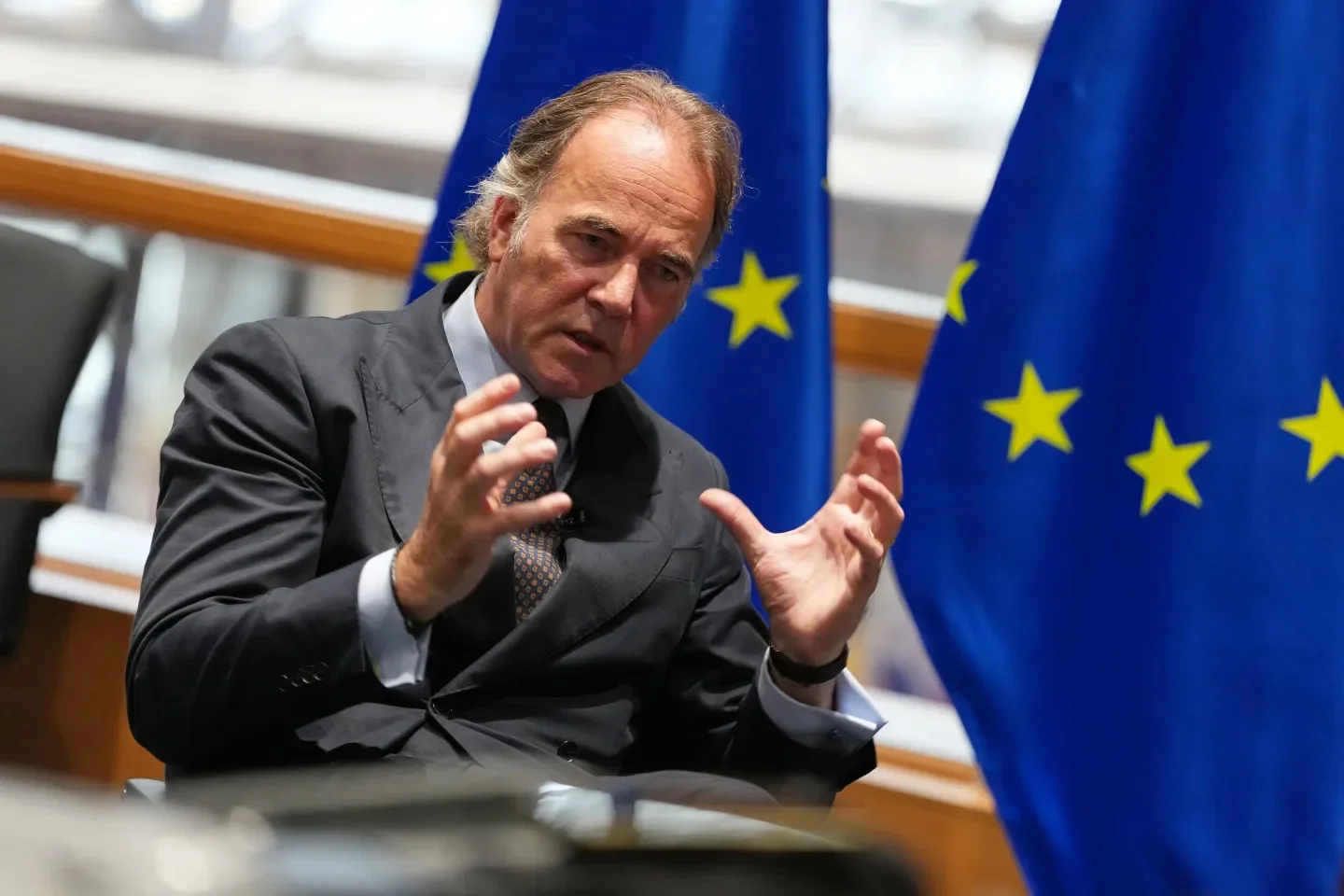
EU warns of chilling new terror menace
A senior European Union security official has issued a stark warning that while the catastrophic brand of jihadist terrorism seen a quarter, century ago has been largely disrupted, a new and chilling menace fueled by digitally native young people is now spreading across the continent with alarming speed. The warning, delivered in Brussels, notes that the current threat landscape is no longer defined by centrally commanded networks but by a volatile, decentralized ecosystem where propaganda is consumed and weaponized online. This evolving danger is particularly troubling to counter, terrorism agencies because it is more unpredictable, and potential attackers are often radicalized in private chat rooms or on encrypted platforms without any physical contact with established terror groups. Authorities are concerned that this new profile of extremist is harder to track, as they may act impulsively following a viral piece of content rather than a structured operational directive.
The assessment comes at a somber milestone, marking roughly 25 years since the September 11th attacks in the United States, an event that reshaped global security architecture and initiated a generation of counter, terrorism efforts focused on Al, Qaeda and its affiliates. While those specific hierarchical structures have been degraded through years of military and intelligence operations, the underlying ideology has proven resilient, adapting to new technologies and generational shifts. European officials now describe a hybrid threat where lone actors, radicalized in a matter of weeks, pose a risk statistically comparable to the organized plots of the past. The exact size and structure of this diffuse network are difficult to quantify, but the consensus is that its reach extends deep into the digital spaces where adolescents and young adults share grievances, memes, and violent content.
The core of this new menace lies in the radicalization pipeline which has moved decisively to the internet, where sophisticated algorithms push users from benign content toward extremist echo chambers. Unlike the operatives who once traveled abroad for training camps in conflict zones, these new perpetrators are often self, taught, using readily available online manuals and unguided by a central command that might provide tactical guidance. Security services note that the ideological drivers are increasingly eclectic, blending extreme religious rhetoric with far, right conspiracy theories or anti establishment grievances, creating a highly potent and personalized cocktail of hate. The threat is characterized by a low barrier to entry, requiring little more than a smartphone and a willingness to use readily available tools, ranging from knives and vehicles to improvised explosives designed from internet schematics. This diffusion of knowledge has made pre, emptive disruption far more complex, as there are fewer physical signatures for security agencies to detect before an attack.
The response from EU member states has been a frantic push to expand digital surveillance capabilities and forge stronger partnerships with tech companies to remove terrorist content within hours of its appearance. However, this has sparked a contentious debate regarding privacy rights and the balance between security and civil liberties, a tension that has heightened in recent years. Officials have reportedly urged social media platforms to do more to proactively detect and mute "micro, communities" that operate in ephemeral channels, which are difficult for law enforcement to penetrate legally. Furthermore, there is a growing emphasis on preventative measures, including deradicalization programs that engage with at, risk youth through educators and social workers, moving beyond purely punitive enforcement. The fundamental challenge remains one of scale, as the volume of digital traffic makes it impossible for human moderators to review everything, leading to a reliance on automated systems that often struggle with nuance and context.
This situation fits into a broader global trend where terrorism has become increasingly "democratized," with the internet acting as the great equalizer that provides a global stage for any individual with a grievance. The EU’s warning reflects a stark realization that the traditional playbook of foreign wars and border control is insufficient to counter a threat that is born and bred within the domestic population. The phenomenon is not isolated to any one nation, as similar patterns have been observed in the United States, the United Kingdom, and other Western democracies, pointing to a systemic societal issue. Social isolation exacerbated by the pandemic, economic uncertainty, and a pervasive sense of cultural alienation are cited as contributing factors that make vulnerable individuals susceptible to online recruitment. The rise of this threat suggests that the primary battleground for the future of security is not a physical terrain but the psychological and cognitive space of the younger generation.
Historically, the evolution of this threat mirrors the shifts seen after other major terror campaigns, where the initial organizational threat was dismantled only for a more resilient, amorphous successor to emerge. In the decade following Al, Qaeda’s attacks, the focus was on sophisticated, multi, country plotting, but the advent of the Islamic State group's sophisticated social media operation radically changed the dynamic, proving that a terrorist entity could serve primarily as a media conglomerate as much as a military force. The current trend represents the logical endpoint of that evolution, where the "brand" has been internalized by individuals who no longer need formal recruitment or oaths of allegiance to act. Security analysts often compare this to the shift in cyber threats, moving from state, sponsored actors to decentralized hacktivists, making it difficult to attribute attacks or negotiate with any single adversary. The lesson from history is grim but clear: as defensive measures harden against one method of attack, the adversary will inevitably innovate to find new vulnerabilities.
Looking ahead, European security agencies are preparing for a long, term struggle that will rely heavily on advancements in artificial intelligence to detect patterns in vast datasets, albeit with a need for strict oversight to protect fundamental rights. The immediate future will likely see increased legislative pressure on technology firms to mandate backdoors or access to encrypted communications, a proposal that meets fierce resistance from privacy advocates and tech executives. We can expect a surge in public awareness campaigns aimed at building societal resilience, teaching young people to critically assess online content and recognize manipulative propaganda. There is a growing realization that law enforcement alone cannot solve this problem, requiring a whole, of, society approach that includes families, mental health services, and community leaders working in tandem. The chilling reality is that the menace is not going to disappear; instead, it will continue to mutate, forcing democratic societies to constantly recalibrate the delicate balance between openness and security.