
US destroys five Iranian oil tankers after IRGC targets warship with ballistic missiles: CENTCOM
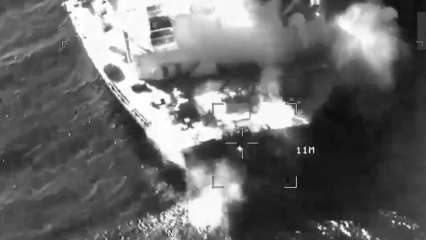
The United States military has destroyed five Iranian crude oil tankers in the latest escalation of hostilities in the region, following two separate attacks by Iran’s Islamic Revolutionary Guard Corps (IRGC) that targeted a US Navy warship with ballistic missiles over the past two days. US Central Command (CENTCOM) confirmed the strikes on Tuesday, stating that the operation was a direct response to the unprovoked attacks on American naval forces operating in international waters. The action marks a significant and violent turn in the ongoing confrontation between Washington and Tehran, moving beyond seizures and cyber operations to the outright destruction of commercial assets. The identity of the specific vessels and the precise location of the incident have not been officially released, but reports indicate the engagement occurred in the Persian Gulf or the Gulf of Oman.
The immediate trigger for this dramatic US response was the IRGC’s employment of anti, ship ballistic missiles against a US Navy destroyer, an act that CENTCOM described as a serious and credible threat to American personnel. According to the military command, the Iranian missiles were fired over a two, day period, with the warship successfully employing defensive countermeasures to avoid being hit, resulting in no reported injuries to US crew members. These attacks represent a notable tactical shift for the IRGC, which has historically relied on swarms of fast attack boats and naval mines rather than precision, guided ballistic missiles in previous maritime skirmishes. The use of such advanced weaponry against a US capital ship is widely interpreted as a deliberate provocation designed to test American resolve and raise the stakes in the ongoing shadow war over shipping routes.
The destruction of the five oil tankers is not merely a punitive action but is also aimed at crippling the financial infrastructure that funds the IRGC’s naval operations and its broader regional proxy activities. The tankers, which are suspected of being involved in the illicit transport of Iranian crude oil to buyers in Asia in violation of US sanctions, were likely considered legitimate military targets under the laws of armed conflict due to their direct support of hostile forces. While the exact method of destruction remains undisclosed, military analysts suggest it likely involved precision, guided munitions launched from aircraft or surface vessels, ensuring the tankers were rendered inoperable without risking a broader exchange of fire. This decisive action signals a departure from the previous US posture of merely intercepting and impounding such cargoes, instead opting for their physical destruction as a more potent deterrent.
Reactions to the strike are likely to be swift and severe, with Tehran expected to condemn the action as an act of maritime piracy and state terrorism, while vowing retaliation against US interests in the region. Conversely, the move will likely be seen as a show of strength by the United States, intended to reassure its Gulf allies and international shipping community that the freedom of navigation will be defended forcefully. The IRGC has publicly stated that it views the continued presence of US carrier strike groups as a threat and has previously threatened to close the Strait of Hormuz, a chokepoint through which nearly a fifth of the world’s petroleum passes. Any further escalation could trigger a spike in global oil prices and disrupt supply chains, which remain fragile due to ongoing conflicts in Europe and the Middle East.
This incident is the latest in a long series of confrontations between the US Navy and Iranian forces that have simmered for decades, often boiling over into open, albeit limited, exchanges of fire. The tanker war of the 1980s, during the Iran, Iraq conflict, saw the US Navy escort Kuwaiti tankers and engage Iranian naval vessels in direct combat, a precursor to the current tensions. More recently, the US has blamed Iran for a series of limpet mine attacks on commercial vessels in 2019 and has conducted strikes on IRGC positions in Syria and Iraq in response to attacks on American bases. The current crisis also comes against the backdrop of stalled nuclear negotiations, where the US and Iran remain at odds over the scope of Tehran’s nuclear program and its ballistic missile development.
The strategic calculus for both nations is now fraught with the danger of miscalculation, as neither side appears willing to back down from its stated red lines. For Iran, the destruction of its oil assets represents a significant economic blow, potentially worth tens of millions of dollars, and directly challenges its primary revenue stream amid crushing sanctions. For the United States, the decision to destroy rather than seize signals that the Biden administration is prepared to use lethal force to uphold its interests, moving beyond economic pressure to kinetic military action. The international community, particularly China and Russia, which have close economic ties with Iran, are likely to call for restraint and a de, escalation, fearing a wider conflict that could engulf the region.
Looking ahead, the immediate threat of further retaliation from the IRGC remains high, with US naval assets in the region likely to remain on high alert for additional missile or drone attacks. The Pentagon is expected to review its rules of engagement and may consider deploying additional forces to the region if the threat persists, though such a move would risk further inflaming tensions. Diplomatic channels, particularly via Oman and Qatar, are likely being activated to establish a de, escalation mechanism, though the destruction of the oil tankers has significantly reduced the political space for compromise. Analysts anticipate a volatile period ahead, where the primary challenge will be containing the conflict to the maritime domain, preventing it from spiraling into a full, scale war that would destabilize global energy markets and draw in other regional powers.