
Raghav Chadha’s Delhi voter registration approved after due process: Poll body
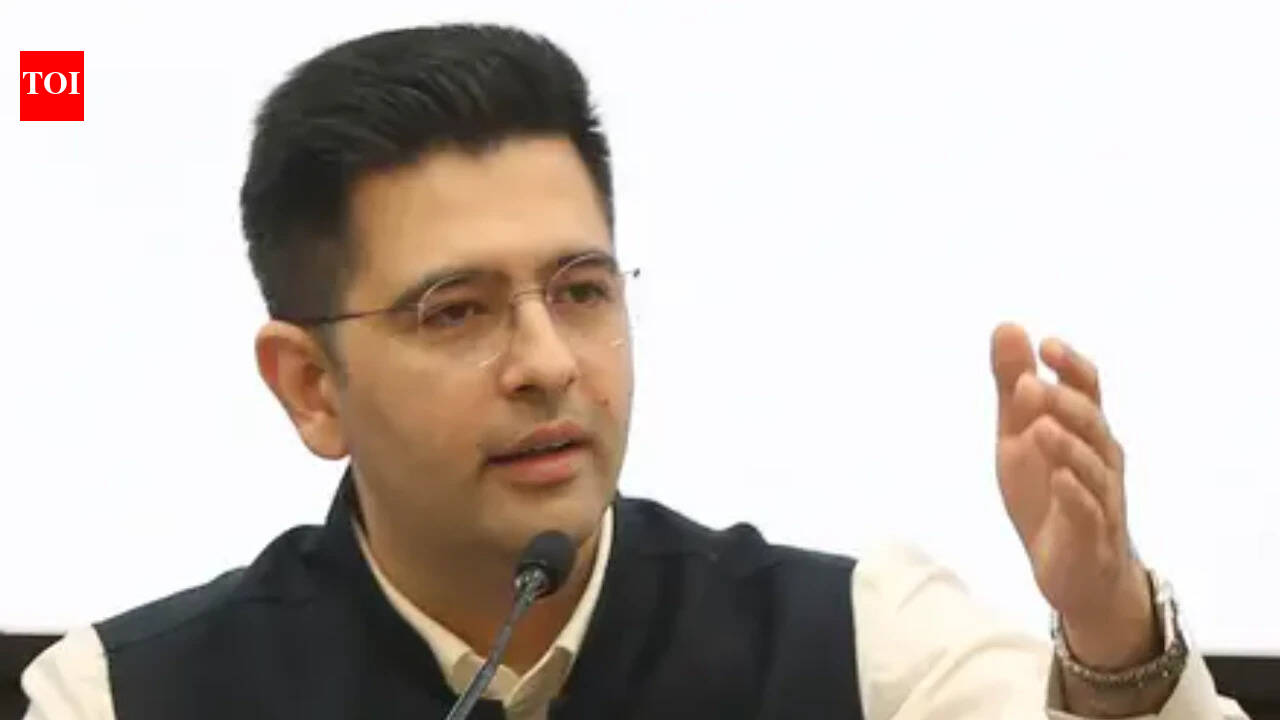
The Delhi poll body on Wednesday confirmed that the voter registration application of Aam Aadmi Party Rajya Sabha member Raghav Chadha had been approved following the completion of all statutory procedures, clearing the way for his name to appear on the electoral rolls for the national capital. The development comes after weeks of political sparring and legal back, and, forth over Chadha’s eligibility to register as a voter in Delhi, a matter that had drawn attention from both the ruling party and the opposition. The election authority’s statement clarified that the application was processed in accordance with the Representation of the People Act and that no special dispensation was granted. This approval effectively secures Chadha’s voting rights in Delhi, where he is a prominent political figure and a vocal critic of the central government.
The controversy surrounding Chadha’s voter registration began when he reportedly attempted to enroll as a voter in Delhi, citing his long, term residence in the city for parliamentary work and personal reasons. Initial reports suggested that his application had faced administrative hurdles, leading to allegations from his party that officials were deliberately delaying the process under pressure from political rivals. The Aam Aadmi Party had publicly accused the Election Commission of bias, while leaders from the Bharatiya Janata Party countered that Chadha’s existing registration in his home state of Punjab was a legal obstacle that needed proper resolution. The matter gained further traction when Chadha, who represents Punjab in the Rajya Sabha, reiterated that Delhi is his primary place of residence, a claim supported by documents he submitted to the authorities.
According to the poll body’s official communication on Wednesday, the scrutiny of Chadha’s application involved verification of his residential proof, identity documents, and a formal declaration that he no longer intended to retain his previous voter registration in Punjab. The authorities also confirmed that the deletion of his earlier enrolment in the Punjab electoral rolls was carried out simultaneously, a mandatory step to prevent dual registration, which is a violation of electoral law. The statement underscored that the approval was neither expedited nor delayed inordinately, and that the timeline was consistent with the standard processing period for similar applications. Officials maintained that every request is dealt with on its merits, and that the final decision was based solely on the documentary evidence provided by the applicant.
The announcement drew a swift response from political circles, with AAP leaders welcoming the development as a vindication of their claim that the earlier obstruction was politically motivated. Party spokespersons, without naming specific individuals, expressed hope that such matters would not be subjected to “unnecessary politicisation” in the future, while insisting that Chadha’s right to vote in the capital was always legally valid. Conversely, BJP functionaries sought to downplay the significance of the approval, arguing that it was a routine administrative matter that had been blown out of proportion by the opposition for media attention. Legal experts noted that the case highlighted the often opaque nature of electoral registration procedures, which can become contentious when politicians move between states for professional or political reasons.
This episode fits into a larger pattern of recurring friction between the AAP, led Delhi government and central institutions, particularly over matters of jurisdiction and administrative autonomy. Over the past year, the party has frequently clashed with the Election Commission and other federal agencies on issues ranging from the appointment of bureaucrats to the conduct of civic polls in the capital. Chadha, who is known for his aggressive parliamentary interventions, has personally been at the centre of several such confrontations, including a notable suspension from the Rajya Sabha earlier this year for alleged procedural violations. The voter registration dispute thus served as yet another flashpoint in the ongoing power struggle between the Delhi administration and the central government, which holds direct control over the city’s police and land matters.
Comparable situations have arisen in recent Indian political history, most notably when legislators from one state seek to establish residency in another for electoral purposes. In 2019, a similar controversy involved a prominent political leader who faced objections to his voter transfer from Gujarat to Maharashtra, with rival parties challenging the authenticity of his declared address. Election authorities in those instances also emphasised the need for strict compliance with the 1961 rules governing enrolment, which require proof of ordinary residence and the explicit surrender of any previous registration. The Chadha case, however, attracted more intense media scrutiny because of his high, profile status and the timing, coming ahead of anticipated assembly elections in Delhi where voter lists are a sensitive topic. The poll body’s decision on Wednesday resolves the immediate issue but does little to settle the broader debate over how residency is verified for public figures.
Looking ahead, Raghav Chadha is now eligible to cast his vote in any upcoming electoral exercise in Delhi, including the next assembly polls, which are expected to be held within the next year. His enrolment may also have symbolic value for the AAP, which often portrays itself as the true representative of Delhi’s citizens against what it calls an undemocratic central imposition. The immediate next step is the formal inclusion of his name in the respective polling booth’s electoral roll, after which he will receive a voter ID card, a process that typically takes a few weeks. The poll body has indicated that all records have been updated, and no further objections are pending against his registration. However, political observers suggest that the battle over voter lists in Delhi is far from over, with both major parties preparing to challenge the eligibility of specific individuals as the elections approach. For now, the matter appears closed procedurally, but its political echoes are likely to persist in the charged atmosphere of the capital.