
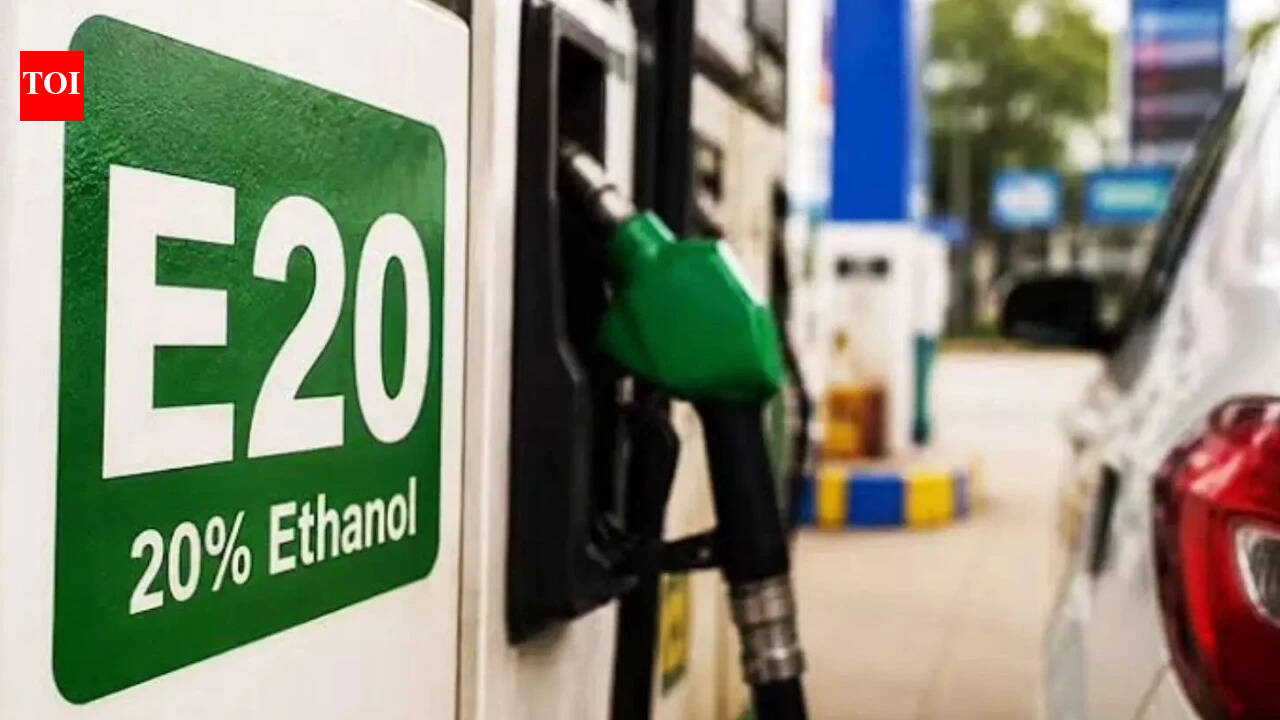
Beyond E20? Only flex, fuel vehicles may have the option, indicates adviser
The central government has signaled a significant policy shift regarding the nation’s ambitious biofuels roadmap, indicating that the option to utilize higher ethanol blends in petrol will likely be restricted exclusively to flex, fuel vehicles rather than the existing fleet on Indian roads. According to an adviser to the Prime Minister, the administration is reportedly unwilling to permit the blending of ethanol beyond the current 20 percent threshold, known as E20, for conventional internal combustion engines currently in circulation. This cautious approach is aimed at protecting the vast number of existing vehicles from potential damage caused by higher ethanol concentrations, which can corrode rubber and plastic components not designed for such fuel. The statement provides the clearest indication yet that the government’s next phase of ethanol adoption will be tied to new, purpose, built automotive technology rather than retrofitting or encouraging the old fleet to run on more aggressive fuel mixtures.
The clarification comes at a crucial juncture for India’s energy independence strategy, which has been aggressively pushing ethanol as a cleaner, domestically produced alternative to imported crude oil. For several years, the government has been steadily advancing the target for ethanol blending, successfully achieving the 20 percent goal ahead of schedule in some regions, with the nationwide rollout of E20 petrol having been formally introduced earlier this year. This rapid acceleration, however, has raised engineering and logistical concerns among automakers and consumer advocacy groups, who have long warned that standard vehicles sold before the E20 mandate were not optimized for such high oxygenate levels. The new statement from the high, level adviser essentially draws a clear line in the sand, confirming that while the journey towards greener fuels will continue, it must be built on a foundation of vehicles that are intrinsically equipped to handle them. By making flex, fuel engines the only pathway to blends higher than E20, the government is seeking to manage the technological transition in a controlled and safe manner for both motorists and manufacturers.
Under this proposed policy direction, vehicles that are not specifically designed to be flex, fuel, meaning those capable of running on any mixture of petrol and up to 85 percent ethanol, will have their fuel options capped at the E20 standard. This implies that the millions of two, wheelers, passenger cars, and commercial vehicles sold prior to the recent ethanol push will not be subjected to future blends like E30 or E40 that are currently under consideration in various global markets. The adviser’s remarks, discussed during a recent industry interaction, underscored the technical realities of ethanol’s corrosive nature and its lower energy density compared to pure gasoline, which can lead to reduced fuel economy and starting issues in cold weather if not properly managed. The emphasis on flex, fuel vehicles as the exclusive recipients of higher blends suggests that the government views these advanced engines as the true bridge to a more sustainable automotive future. This decision effectively transforms the policy debate from one focused on fuel composition alone to one centered on powertrain innovation and the eventual widespread availability of flex, fuel technology.
The automotive industry has responded with a mix of relief regarding the existing vehicle base and renewed interest in developing new flex, fuel powertrains, though no official mandate has been issued yet. For major manufacturers, this news provides a clear regulatory horizon, allowing them to plan production cycles and research and development budgets without fearing a sudden shift in fuel standards that could leave current models obsolete. However, there are substantial concerns regarding the cost implications for consumers, as flex, fuel engines require more expensive components, including advanced sensors and fuel delivery systems that can withstand higher ethanol content. While the government has previously promoted flex, fuel vehicles as a strategic priority, the lack of a widespread ethanol retailing network for blends beyond E20 remains a significant practical hurdle that will need to be addressed to make such vehicles viable. Industry experts note that the move could spur a new wave of investment in alternative fuel technologies, but it will likely require significant fiscal incentives to make these greener vehicles attractive to the price, sensitive Indian market.
This potential policy stance aligns with India’s broader global commitments to reduce carbon emissions and its stated goal of achieving net, zero emissions by 2070, where the transportation sector plays a pivotal role. While ethanol is not a zero, emission fuel, it is considered carbon, neutral on a lifecycle basis if produced sustainably from sugarcane or biomass, helping the nation reduce its reliance on fossil fuels. The focus is now shifting towards the agricultural economy as well, as India seeks to utilize surplus sugarcane and damaged food grains for ethanol production, providing an additional income stream for farmers. Yet, this transition is not without its critics, who argue that prioritizing ethanol for fuel could strain water resources and divert land from food production, a debate that intensifies during years of poor monsoons. The policy to restrict higher blends to flex, fuel vehicles is a response to these complex trade, offs, seeking to maximize the benefits of ethanol without compromising the reliability of the existing mobility ecosystem.
Historically, India’s approach to ethanol blending has been incremental and cautious, with previous attempts to introduce higher blends in the early 2000s stalling due to a lack of feedstock and consumer acceptance. The country learned valuable lessons from the global experience, particularly in Brazil, which has successfully run a massive flex, fuel fleet for decades, and the United States, where E15 and E85 have been introduced with varying levels of consumer confusion. In India, early experiments with E5 and E10 faced significant hurdles due to inconsistent availability and the technical limitations of older carbureted engines, which had to give way to modern fuel, injected systems. The current E20 rollout itself was delayed and carefully phased to allow the automobile industry to update its models and the oil marketing companies to upgrade their storage, transportation, and dispensing infrastructure. This historical context of technological caution explains why the government is hesitant to impose E30 or higher on a fleet that has only just adapted to E20, choosing instead to let the market naturally evolve with newer, more capable flex, fuel vehicles.
Looking ahead, the focus will now turn to the drafting of specific regulations and the announcement of a clear timeline for the mandatory introduction of flex, fuel vehicles, which the government is currently evaluating. The immediate expectation is that upcoming policy frameworks may mandate that new vehicle models, sold from a specific future date, be produced exclusively as flex, fuel capable, a move that would dramatically reshape the Indian automotive market. Concurrently, the government is expected to prioritize the expansion of ethanol production capacity and the creation of a dedicated distribution infrastructure to ensure that fuels with higher ethanol content are physically available to consumers who purchase flex, fuel cars. The success of this strategy will depend on a coordinated effort between the ministries of petroleum, transport, and agriculture, alongside a sustained dialogue with automakers. As India navigates this critical junction in its green energy transition, the safety and longevity of the existing vehicle fleet remains paramount, ensuring that the nation’s drive toward cleaner fuel does not come at the expense of the vehicles currently on the road.