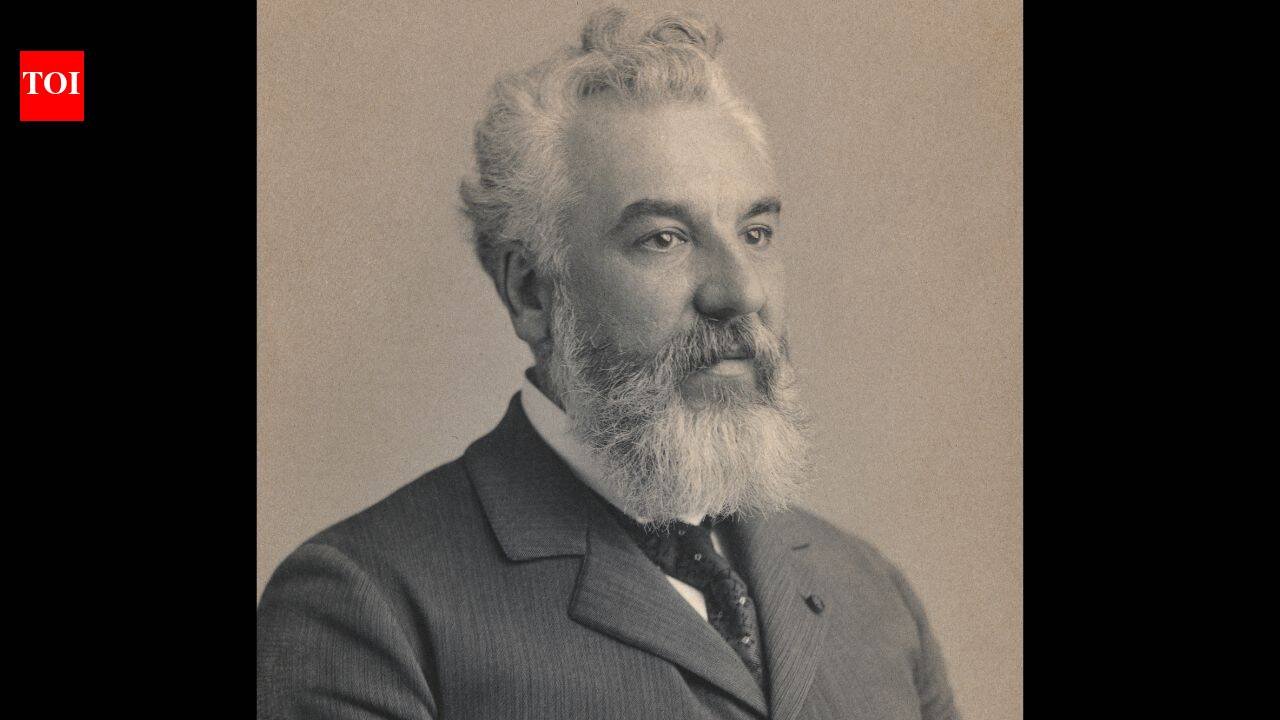
Quote of the day by Alexander Graham Bell: "Concentrate all your thoughts on the task at hand. The sun's rays do not burn until…", lesson about turning potential into results
The enduring relevance of Alexander Graham Bell’s observation on focus, made in an era of steam engines and handwritten correspondence, has resurfaced as a vital counterpoint to the digital age’s relentless fragmentation of attention. Bell’s famous assertion that the sun’s rays only burn when concentrated into a single point serves as a powerful metaphor for human productivity, a lesson that technologists and cognitive scientists argue is more urgent than ever in 2025. With the proliferation of smartphones, social media feeds, and workplace messaging platforms, the average professional now faces a daily barrage of interruptions that directly undermines the deep, sustained thought required for innovation. The inventor’s words, originally intended as a personal mantra for his own relentless experimentation, have been widely shared across academic and corporate circles as a prescription for reclaiming efficacy. The principle bridges a 19th, century understanding of physics with a 21st, century crisis of workplace psychology, suggesting that the fundamental challenge of achievement has changed little despite radical technological advancement.
The context for this renewed interest lies in a growing body of research documenting the economic and cognitive costs of task, switching. Recent studies from leading behavioral economics institutions indicate that it can take upwards of twenty minutes for an individual to fully re, engage with a complex problem after a single interruption, a statistic that has alarmed productivity analysts. Bell’s quote, often cited in full as “Concentrate all your thoughts on the task at hand. The sun's rays do not burn until brought to a focus,” provides a simple, intuitive framework for understanding these complex neurological findings. His analogy draws a direct line between the passive diffusion of light and the passive diffusion of mental energy, where neither produces significant heat or illumination. In contrast, a magnifying glass focuses scattered rays into a concentrated beam capable of igniting paper, mirroring how a disciplined mind can transform latent potential into tangible results. This scientific parallel has made Bell’s words a staple in modern management seminars that eschew buzzwords for fundamental principles.
Implications of this philosophy are now being observed in the design of new digital tools, where a counter, movement toward “slow computing” and distraction, free interfaces is gaining traction. Software developers are increasingly incorporating features like focus modes, scheduled notification summaries, and single, task interfaces that force users to emulate Bell’s prescribed behavior. Leading figures in the technology sector have publicly endorsed the concept of deep work, drawing a direct lineage from Bell’s laboratory techniques to contemporary coding practices that require hours of uninterrupted concentration. Furthermore, educational institutions have begun to test curricula that explicitly teach concentration as a skill, arguing that the ability to filter noise is a prerequisite for critical thinking in an information, saturated world. The reaction from the scientific community is one of validation, not for Bell’s physics, which is elementary, but for his foresight in identifying human attention as the ultimate finite resource.
This philosophical pivot fits into a larger trend of digital minimalism and a societal backlash against the culture of performative busyness that defines the modern workplace. The rise of artificial intelligence tools that can handle administrative drudgery has paradoxically increased the value of uniquely human cognitive abilities, such as long, range planning and complex synthesis, both of which demand extreme focus. Companies are restructuring workflows, moving away from open, plan offices that encourage chatter and toward hybrid models that reserve dedicated, interruption, free blocks for high, stakes project work. The conversation has shifted from simply managing time to managing energy and attention, with Bell’s analogy serving as a conceptual anchor for this transition. This broader movement suggests a collective realization that while technology has amplified our capabilities, it has simultaneously diluted our capacity to wield them effectively.
Historically, Bell’s own career singularly exemplifies the power of his advice, as his invention of the telephone was not a sudden epiphany but the result of years of laser, guided work on harmonic telegraphy. He famously worked in parallel with other inventors like Elisha Gray, and his success is often attributed to his meticulous, monomaniacal focus on transmitting sound, which allowed him to navigate the patent process mere hours ahead of his rivals. Similarly, the great scientific breakthroughs of the 20th century, from the discovery of DNA’s structure to the Apollo program’s calculations, were achieved by teams that effectively created isolated pockets of deep concentration. These historical precedents remind us that the digital age did not introduce the problem of distraction; it merely accelerated it, offering a constant stream of trivial elegance that competes with substantive work. Bell’s insight remains a timeless benchmark against which we measure our own discipline, a reminder that the physics of optics and the psychology of achievement obey the same law.
Looking ahead, the application of Bell’s principle is expected to become a defining factor in the success of emerging technologies, particularly in fields like human, machine collaboration. As generative AI handles routine coding and data processing, the remaining human role will necessitate a higher level of strategic focus to direct these powerful tools effectively, making the ability to concentrate a premium economic skill. We are likely to see an increase in specialized training programs and neurofeedback tools designed to strengthen attentional control, moving focus from a soft skill to a hard metric of professional success. The next decade may also see architectural changes in our living and working spaces, designed to mitigate the effects of environmental distraction rather than merely combat digital noise. Ultimately, Bell’s quote serves as a guiding principle for the next wave of innovation, positing that the greatest technological advancements will not come from more powerful hardware, but from more focused human minds. The challenge ahead lies in our collective will to put down the magnifying glass of endless information and instead direct our internal rays toward a single, burning point of creation.