
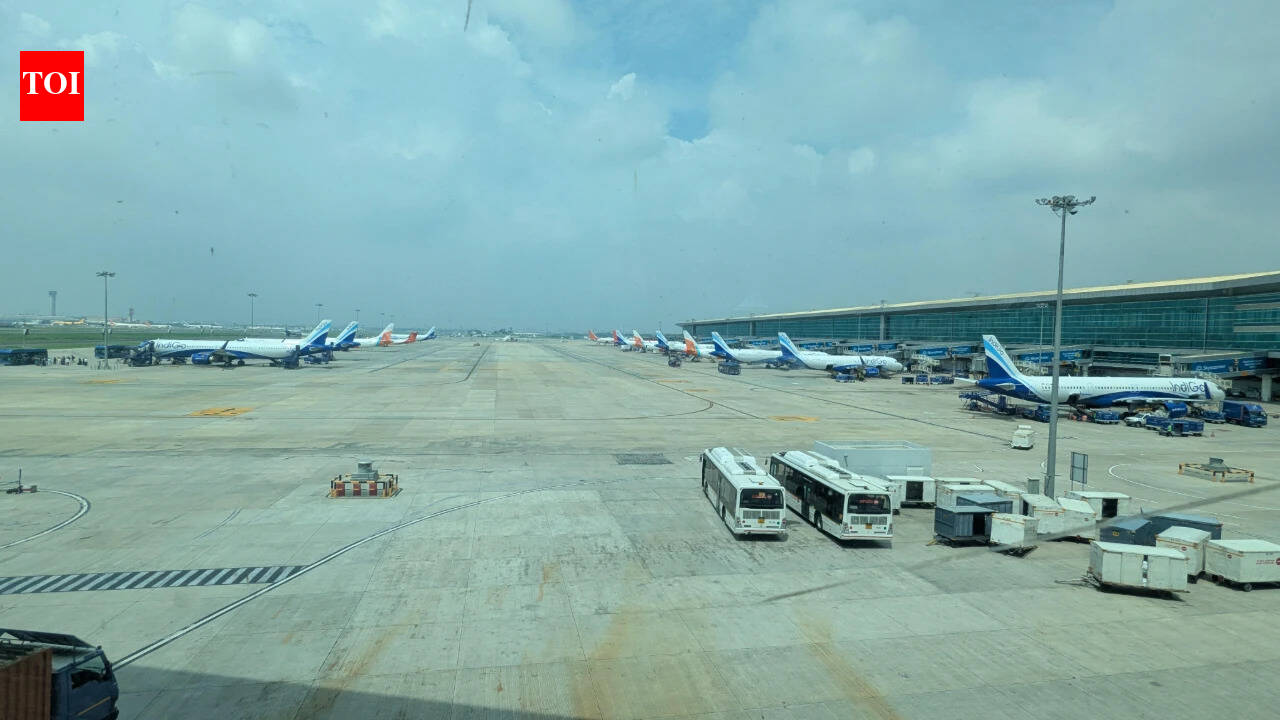
IGIA new master plan sees 50% growth in international capacity by 2030
The Indira Gandhi International Airport (IGIA) in New Delhi, India’s busiest aviation hub, is preparing for a significant expansion of its international operations, with a new master plan targeting a growth of over 50 percent in international passenger traffic by the year 2030. This strategic development, which involves the construction of a new pier dedicated to international flights, is being spearheaded by the airport operator, Delhi International Airport Limited (DIAL), to address the surging demand for overseas travel from the national capital region. The initiative is a direct response to the robust post, pandemic recovery in the aviation sector, which has seen international passenger numbers climbing towards and beyond pre, COVID levels. The expansion is designed to not only increase passenger handling capacity but also to elevate the overall travel experience by introducing more modern facilities and streamlined processes. Ultimately, the plan solidifies IGIA’s position as a premier international gateway in South Asia, competing with other major transit hubs in the region.
The background to this ambitious expansion lies in the consistent pressure on IGIA’s existing infrastructure, particularly its Terminal 3, which handles a substantial portion of international traffic. The airport has consistently operated near its designed capacity of roughly 70 million passengers per annum, with international travel being the fastest, growing segment in recent years. The new master plan essentially recalibrates the airport’s long, term strategy, shifting focus from domestic expansion towards building a more robust framework for global connectivity. This move is supported by the Indian government’s broader policy objectives, which include promoting the country as a major aviation hub and a preferred destination for tourism and business. Furthermore, the growth of Indian carriers, specifically their aggressive expansion into long, haul routes, has necessitated a corresponding upgrade in the ground infrastructure at their primary base. The proposed new pier is envisioned as a critical component to bridge the gap between current operational limits and the forecasted demand for the next decade.
According to the official outline of the master plan, the new pier will be specifically engineered to handle wide, body aircraft, which are the mainstay of international long, haul operations, thereby increasing the number of parking stands and aerobridges available for such flights. This expansion is expected to facilitate a smoother passenger flow, reducing the current dependency on bus transfers for international flights, which has been a point of contention for travelers in the past. The plan also includes provisions for enhanced security and customs processing areas, designed to expedite the immigration and baggage reclaim processes for arriving and departing passengers. DIAL officials have reportedly stated that the new infrastructure will integrate state, of, the, art technology for passenger processing, aligning with the digital initiatives pushed by the central government, such as DigiYatra. While precise investment figures have not been officially disclosed, industry estimates suggest a multi, billion rupee investment aimed at future, proofing the airport against the next wave of traffic growth. The design of the pier is expected to be modular, allowing for future expansion should the traffic numbers exceed current projections.
The announcement of the expansion has been met with a positive response from the airline industry, which sees the enhanced capacity as a crucial enabler for launching new international routes from Delhi. Industry representatives have long cited infrastructure bottlenecks as a primary constraint on their growth plans, and this development directly addresses that critical issue. Travelers are likely to benefit from increased flight frequencies and potentially more competitive airfares as airlines gain the confidence to add capacity on popular international corridors. The implications extend beyond the airport itself, influencing hotel occupancy rates, tourism inflows, and the overall business climate in the National Capital Region. For international carriers and foreign investors, the move signals a clear commitment from Indian aviation authorities to maintain world, class infrastructure to support a rapidly modernizing economy. It also puts pressure on other major Indian airports, such as Mumbai and Bengaluru, to accelerate their own expansion timelines to keep pace with the growth being championed by Delhi.
This development at IGIA fits into a larger trend of unprecedented growth in the Indian aviation market, which is currently one of the fastest, growing in the world. The country’s expanding middle class, with increasing disposable income, and the government's focus on improving regional connectivity under the UDAN scheme have fueled a domestic boom, which in turn is now translating into a surge in international travel demand. Furthermore, the shift in global flight paths, with carriers avoiding Russian airspace, has made Indian airports more attractive as refueling and transit points for flights between Europe and Southeast Asia. This geopolitical dynamic has presented a unique opportunity for IGIA to capture more transit traffic, which the new master plan seems keen to exploit. The expansion also aligns with the government’s target of making India a $5 trillion economy, wherein robust air connectivity is seen as a vital cog in promoting trade, commerce, and foreign direct investment. As such, the airport's growth is not just an isolated commercial venture but a strategic national asset in the making.
Historically, IGIA has consistently undergone phases of massive infrastructure upgrades to keep up with the exponential growth in air travel that has defined the last two decades. The completion of Terminal 3 in 2010 for the Commonwealth Games was a watershed moment that catapulted the airport onto the global stage, setting a new benchmark for passenger amenities in the region. Prior to that, the airport operated from separate domestic and international terminals, a logistical hurdle that was later resolved by integrating operations into the unified Terminal 1 and Terminal 3 complex. Even during the recent pandemic, DIAL utilized the downturn to fast, track maintenance and digital upgrades, preparing the infrastructure for the rapid demand rebound that followed. However, this current proposed expansion is unique in that it primarily targets the international segment, a departure from previous cycles that focused heavily on overall capacity enhancement, including domestic travel. The decision reflects a mature understanding that Delhi's role has evolved from a point, to, point destination to a massive connecting hub for global traffic.
Looking ahead, the next steps involve the formal approval of the master plan by the Airports Economic Regulatory Authority (AERA) and other government bodies, followed by the tendering and construction phase. DIAL is expected to complete the new pier in phases, with the first section likely to be operational well before the 2030 target to provide immediate relief to the existing infrastructure. The construction will inevitably cause some operational disruption, and the airport authorities will need to manage logistics carefully to minimize inconvenience to the millions of passengers who use the airport annually. Beyond the pier, the success of this plan will also depend on parallel upgrades to airside capacity, such as taxiways and runway utilization, which are crucial for handling the increased aircraft movements. Once fully operational, the new international capacity is expected to solidify IGIA's position among the top airports globally by passenger volume. This project is unequivocally a bet on the continued trajectory of India’s economic growth and its increasing integration into the global network of commerce and travel, promising to reshape the flying experience for millions.