
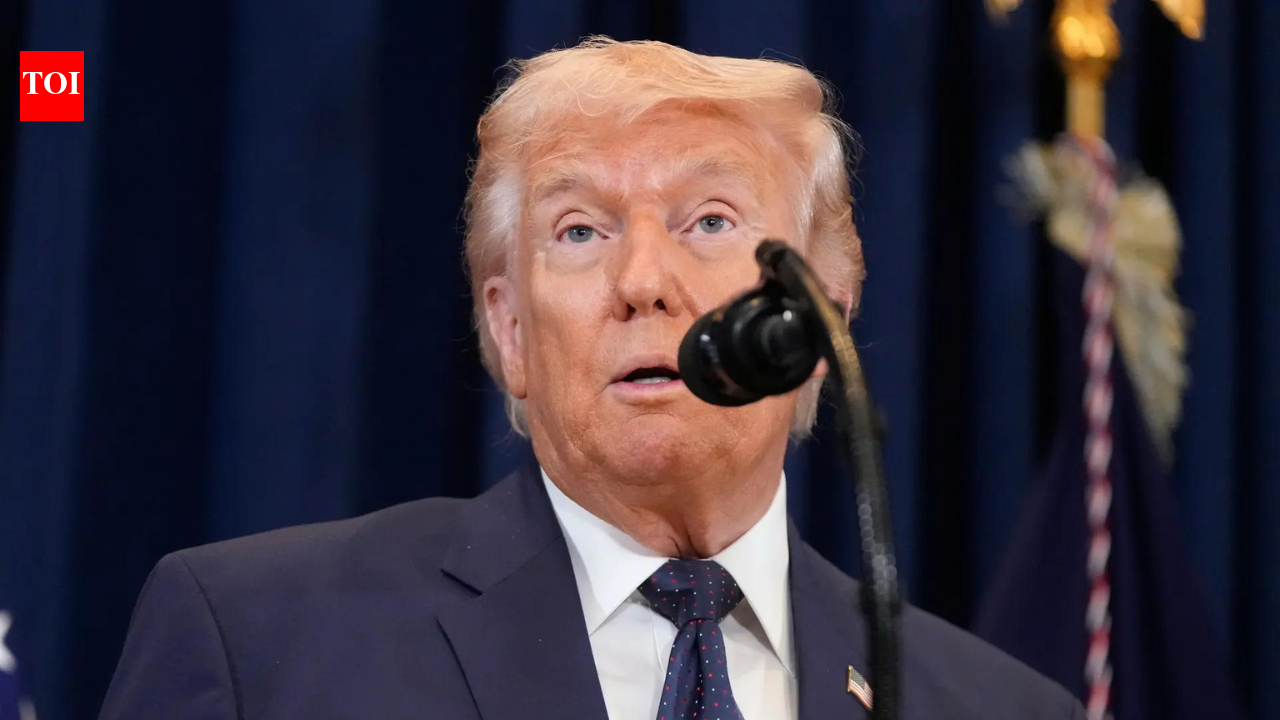
Trump makes 9/11 about himself, won't mark 25th anniversary at Ground Zero
The 25th anniversary of the September 11, 2001, terrorist attacks is set to be commemorated next week, but President Donald Trump has indicated he will not attend the memorial ceremony at Ground Zero in New York City, a decision that has drawn sharp contrast with his political rivals. Instead, according to reports and his own public schedule, the President is expected to mark the occasion with a video message and by attending a separate event, a choice that has reignited debate over his relationship with the solemnity of the national tragedy. The development follows a contentious appearance at a White House event on Tuesday, where the President offered a revised and self, centric account of his actions on that fateful day. In this telling, he described being bodily lifted to safety by two firefighters from a site near an unstable building, a narrative that contradicts earlier, more modest descriptions of his whereabouts that morning. The confluence of these events has placed the President at the center of a media storm just as the nation prepares to honor nearly 3,000 victims.
The controversy stems from a fundamental question of presidential protocol and personal narrative that has followed Mr. Trump for years: his exact location and activities on the morning of September 11, 2001. While it is a matter of public record that Mr. Trump was in New York City that day and gave interviews from his office in Trump Tower, he has repeatedly offered varying accounts of his proximity to the destruction. Early on, he stated he watched the second plane hit from his building, and in other instances, he claimed to have rushed toward the World Trade Center site to offer assistance. However, the new, dramatic detail of being rescued by firefighters, which emerged during a discussion about first responders, has been met with skepticism, as no contemporaneous record or eyewitness account supports the claim that he was ever in a position of such immediate peril. This revisionism is particularly jarring to many veterans and first responders, who view the site as sacred ground and bristle at what they perceive as an appropriation of heroism.
The decision to skip the Ground Zero ceremony is a significant break from tradition, as every sitting president since the attacks has attended the major anniversary commemorations in New York, including Mr. Trump himself in 2018 and 2019. While the White House has cited scheduling conflicts and a desire to avoid disrupting the event with his security presence, critics argue that the move is a deliberate snub to a city and a constituency that has often been at odds with him. This is compounded by the fact that his likely Democratic opponent in the upcoming election, Vice President Kamala Harris, and her running mate, Governor Tim Walz, are both scheduled to attend the ceremony, creating a powerful visual contrast of leadership and empathy. Furthermore, the Republican nominee for the Senate in New York is also expected to be present, meaning the President will be conspicuously absent from a gathering of the nation’s political class united in remembrance.
The reaction to the President’s revised 9/11 story and his absence from Ground Zero has been swift and largely critical across the political spectrum, though muted among his core supporters. Several prominent conservative commentators have publicly expressed discomfort, noting that fabricating or exaggerating details about a national trauma is a dangerous political gamble that undermines his credibility on issues of national security. Democratic leaders have seized on the moment, framing it as evidence of a self, absorbed leader who is incapable of sharing a stage without making the event about himself. However, within right, wing media circles, the narrative is being framed differently, with some anchors suggesting that the President is being treated unfairly and that his absence is justified by security concerns or that his presence would become a distraction, thereby allowing the victims’ families to mourn without a political circus.
This incident fits into a larger, troubling pattern of Mr. Trump’s interaction with military service and tragedy, where his personal grievances and need for validation often overshadow institutional reverence. His 2018 decision to cancel a visit to an American military cemetery in France due to rain, which he later denied, and his reported comments referring to fallen soldiers as "losers" and "suckers," have established a baseline of distrust among the military community. The new 9/11 account is consistent with a psychological need to be seen as the protagonist in every story, even one where the true heroes are the hundreds of firefighters and police officers who ran into the burning towers. By claiming to have been rescued by the very men he now seeks to honor, he inverts the narrative, placing himself at the center of the drama rather than as a distant observer, effectively erasing the boundary between spectator and survivor.
Historically, presidents have used moments of national tragedy to unite the country, often subordinating their own personas to the collective grief of the public. George W. Bush’s bullhorn address to first responders at Ground Zero days after the attacks remains a defining image of presidential resolve, not because of what he said, but because of his physical presence in the rubble. Similarly, Barack Obama’s quiet solemnity at the 10th anniversary memorial was praised for its restraint. Mr. Trump’s approach stands in stark contrast, prioritizing a self, aggrandizing narrative over the communal act of mourning. The comparison is stark; where other leaders have sought to be a calming presence, Mr. Trump seeks to be a heroic figure. This is not merely a matter of personal style but reflects a broader shift in how the former president views the office—not as a stewardship of national symbols, but as a platform for personal myth, making.
Looking ahead, the immediate future will see the President release a pre, recorded video message for the anniversary, which his aides promise will be "respectful and unifying," though many will scrutinize the text for any deviation from the scripted message of unity. The political fallout, however, is likely to linger, as the 25th anniversary provides a potent backdrop for the final stretch of the campaign season. Polls suggest that while the economy remains the top issue for voters, character and empathy are decisive factors in swing states, and this controversy feeds directly into the Democratic narrative that the President lacks the moral compass required for the office. For the families of the victims, the anniversary will be a day of private grief, but the public theater surrounding the President’s absence has already cast a long shadow, ensuring that the debate over who owns the memory of 9/11 will continue well beyond the moments of silence. The President’s team remains defiant, dismissing the criticism as partisan attacks, but the damage to his image among moderate voters, particularly in the suburbs of New York and Pennsylvania, may prove difficult to repair before November.