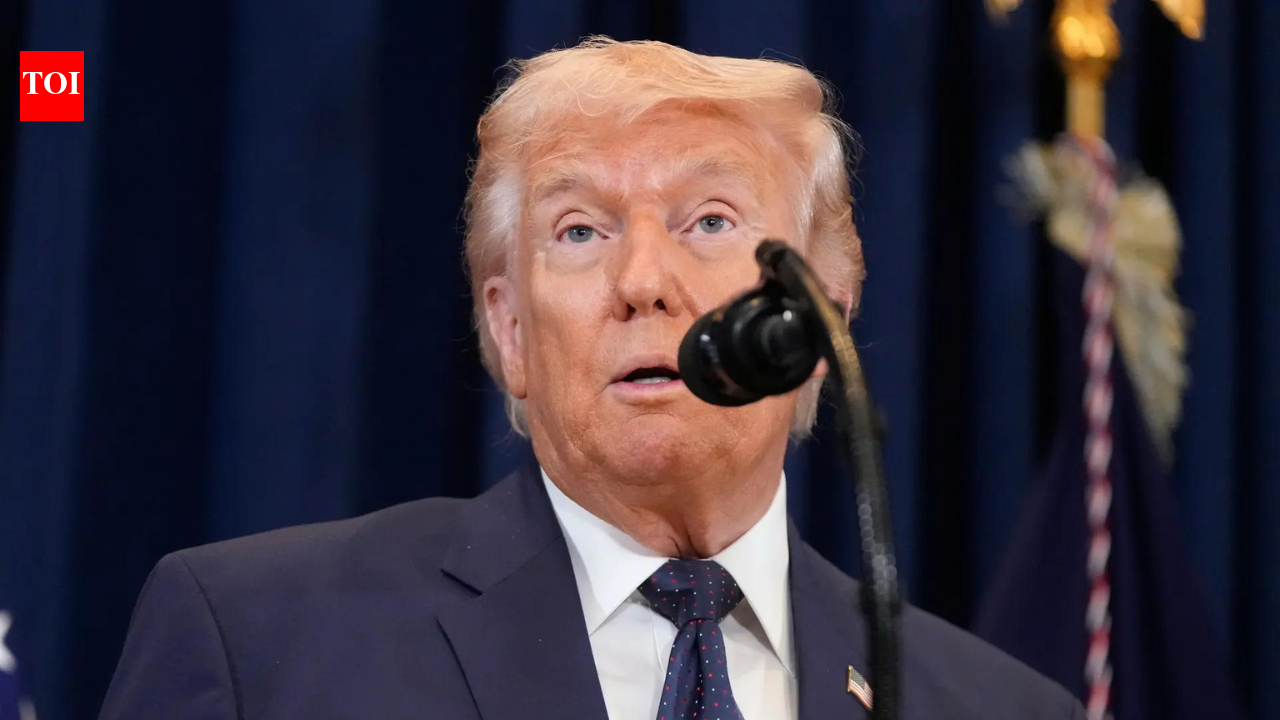

Trump claims Iran war will end right after U.S. midterm elections
The United States’ military posture toward Iran has entered a volatile new phase, with former President Donald Trump asserting that any armed conflict with Tehran would conclude abruptly immediately following the U.S. midterm elections. Speaking to supporters and in informal settings, Trump has framed the timeline as a deliberate calculation, alleging that Iran’s leadership is desperately attempting to influence the outcome of the congressional races to secure a more favorable negotiating partner in Washington. He has stated that Tehran believes a prolonged war would damage his political standing and that of his endorsed candidates, thereby creating a window of intense military activity that would close the moment the votes are counted. These remarks come amid already heightened tensions in the region, with escalating exchanges between U.S. forces and Iranian, backed proxies in the Middle East. The former president’s comments, while not official policy, carry significant weight given his continued influence over the Republican Party’s base and his potential candidacy for the 2028 presidential race.
The background to this explosive claim is a complex web of failed diplomacy and escalating confrontation that has defined U.S., Iran relations for decades. The Trump administration previously withdrew from the 2015 nuclear accord and enacted a policy of maximum economic pressure, a strategy that Tehran has consistently countered with advances in its uranium enrichment program and support for regional militias. In recent weeks, reports from international agencies have indicated that Iran’s stockpile of highly enriched uranium has grown beyond any previous level, prompting urgent warnings from European signatories to the original deal. Simultaneously, the Pentagon has bolstered its naval presence in the Persian Gulf, deploying additional carrier strike groups and missile defense systems to protect shipping lanes and allied bases. This military buildup has created a tinderbox environment where a single miscalculation, such as an intercepted drone or a rocket attack on a U.S. outpost, could spiral into a direct confrontation. Trump’s assertion that the end would be swift appears to be an attempt to reassure a war, weary public that any engagement would be limited and decisive, rather than another open, ended occupation similar to Iraq or Afghanistan.
While no official White House policy document has been produced outlining such an election, linked strategy, Trump has repeatedly suggested that the Islamic Republic is playing a waiting game. He has argued, without providing specific intelligence, that Iranian leaders are intentionally restraining their most aggressive actions until after the polls close, fearful that a pre, election crisis might rally the American public around the flag and boost his political opponents. This narrative paints Tehran as a rational actor that understands the electoral calendar as clearly as any domestic pollster, a perspective that contradicts the more common portrayal of Iran as a revolutionary, unpredictable force. The former president has said that once the election pressure is off, the U.S. military would have a "free hand" to deliver a devastating blow that would cause the Iranian government to capitulate within a matter of days. He has characterized this scenario not as speculation but as a certainty, urging the public to trust his instincts on deal, making and military intimidation. Notably, these statements have not been met with official corroboration from the Department of Defense or the State Department, which have maintained a cautious public silence on the matter.
Reactions to Trump’s prediction have been sharply polarized, mirroring the deep divisions in American politics. His staunchest allies have applauded the stance as a demonstration of strong leadership, arguing that demonstrating a willingness to end the conflict quickly would actually deter a prolonged war by making the costs of resistance clear to Tehran. Conversely, foreign policy analysts and Democratic lawmakers have expressed alarm, warning that such public declarations could be counterproductive, actually encouraging Iran to hunker down and wait out an administration they view as transient. Critics argue that telegraphing a specific end, date for military operations is a tactical blunder, as it invites the adversary to employ time, consuming defensive strategies, such as dispersing missile launchers or moving nuclear materials to deeply buried facilities. International partners in Europe and the Gulf states have reportedly expressed private frustration, fearing that an election, centric war policy could destabilize oil markets and trigger a massive refugee crisis without achieving lasting regime change. The Iranian government itself has issued defiant statements, dismissing the former president’s warnings as psychological warfare and reiterating that its armed forces are prepared to fight for years, not days, if necessary.
This situation fits into a broader pattern of American foreign policy becoming increasingly entangled with domestic electoral cycles, a trend that has accelerated in the past decade. The politicization of national security decisions has eroded the traditional bipartisan consensus that foreign policy should be conducted with an eye toward long, term strategic interests, regardless of who holds the Oval Office. Experts note that adversaries like Iran, Russia, and North Korea have become adept at monitoring U.S. political discourse and tailoring their provocations to exploit perceived fractures in the American system. The concept of an "October surprise," where a foreign event is timed to influence a November vote, has been a staple of political lore for a century, but the current dynamic suggests a reversal, where the U.S. itself is accused of timing its war, making to its own electoral calendar. This blurring of lines between military action and campaign strategy undermines the credibility of American warnings globally, as allies and adversaries alike question whether any threat is genuine or simply a rhetorical device designed to rally supporters. Furthermore, the increasing reliance on executive action for military strikes, bypassing congressional approval, has made the personal whims of a single leader more consequential than ever before.
Historically, the relationship between war and American elections has been fraught with peril, with several presidents paying a heavy political price for conflicts that dragged on longer than promised. The Vietnam War serves as the most cautionary tale, where President Lyndon B. Johnson declined to seek re, election in 1968 as the conflict consumed his presidency and divided the nation. More recently, the 2003 invasion of Iraq was launched in the spring, conveniently far removed from the 2004 election cycle, but the subsequent insurgency and prolonged occupation became a major liability for President George W. Bush, though he ultimately won a second term. The Nixon administration’s attempts to influence the 1968 Paris peace talks to secure an electoral advantage remain a dark mark on the historical record, illustrating the dangers of prioritizing political outcomes over national security objectives. Conversely, some presidents have benefited from military actions that were perceived as successful and limited in duration, such as the 1983 invasion of Grenada or the 1986 bombing of Libya, which boosted domestic approval ratings. These historical precedents suggest that a short, victorious war can be a political asset, but the outcome is rarely as predictable as anticipated, and the fog of war often obliterates the clearest of timelines.
Looking ahead, the immediate future hinges on whether the current rhetoric is translated into concrete military action. The Pentagon is reportedly updating its contingency plans for a strike on Iranian nuclear facilities, but military leaders are known to be wary of any operation that could widen into a regional war involving Hezbollah in Lebanon and the Houthis in Yemen. The next few weeks will likely see a flurry of diplomatic activity, with envoys shuttling between Washington, Doha, and Muscat in a desperate attempt to find an off, ramp that satisfies both sides. Should the midterm elections result in a divided government, any potential military action could face immediate legal challenges regarding the War Powers Resolution, which requires congressional authorization for prolonged hostilities. The former president’s promise of a swift end is viewed with deep skepticism by logistical experts, who note that disabling Iran’s nuclear program is a complex, multi, target mission that may require repeated strikes over an extended period. For the American public, the coming months will be a test of nerves, as they are asked to choose between the promise of a short, sharp shock and the haunting echo of past conflicts that were supposed to be over by Christmas but lasted for decades.